Showing posts with label Marshfield MA history. Show all posts

Monday, March 10, 2014

WW2 Homemade Racer

Being a young boy growing up during WW2 found yourself without lots on your wish list. A cart, sled, pedal car, or anything made of steel was impossible to have unless it was a hand-me-down. The best place to find a treasure was the dump, the "weekend store," usually with a  broken or missing a part.

Being a country boy with a clever father, many finds could be repaired. Cast away baby carriages would supply the wheels and axles for a wagon or push car racer. The hardware to hold a cart project together -- nails, screws -- all had to be on hand. Nothing came from the hardware store or the lumber yard. All was found, and at no cost.

My first wartime toy was a race car that mostly got pushed up and down Station Street. The wheels came from a cast-off wagon. The front wheels were on a pivot for steering. A rope tied to each side of the axle: a pull on the left rope turned you left, and so on. The rear wheels had rub sticks for braking. If you were lucky they slowed the racer slightly. The hood was from a steel barrel. One would sit straight-legged into the barrel, and lean against a back support.

That's me, 10 years old in my racer.

On occasion we would haul it to Seager's Hill. Steering was a feat and stopping was impossible.
Crashing was inevitable! Most of the crashes were rolling on its side. No helmet, no safety belt, no elbow pads. I hauled my racer home numerous times with bent wheels! I have no idea why none of us got hurt coasting that hill!

by Ray Freden  Seaview/Marshfield, 70 years

"There are memories that time does not erase." - Cassandra Clare

Wednesday, November 6, 2013

Special Times and Foods

-->
Both my Mom and Dad's parents were Swedish immigrants. Dad had told me that the Swedish language was not allowed around the children. However his parents would use Swedish in their evening conversations. Only a few words and phrases could Dad remember. He referred to himself as a “Svenska Pojke,” (Swedish Boy) and Mom as a “Svenska Flicka.” He would use “Tack Sa Myket” (thank you very much) often. There were a few more phrases that have slipped away from me.

At Thanksgiving and Christmas time, both parents had favorite Swedish foods. A braided Swedish coffee bread was always on the table at breakfast, sometimes in the shape of a wreath.


Kanebulla, (cinnamon buns) were also a breakfast treat. 

Spritz cookies were a favorite of mine at Christmas time, and still are.

Swedish Limpa bread (Wort Loaf) would also be made by Mom.

Swedish meatballs with gravy, served over mashed potatoes, was always welcome.


A note here: never, never would I let the peas touch the mashed potatoes. Nothing could touch anything! Boy how things have changed. Oh how I remember picking the onions out of spaghetti sauce -- no onions for me.

I wrote about Knackebrod, crisp bread, published 2/21/11.


It was seldom that this crisp bread wasn't in the cupboard for a snack with cream cheese or blue cheese as a spread. It was my job to mash the wedge of blue cheese with milk to make it spreadable. To this day, it's still my job to mash the  blue cheese wedge, and my job to consume the whole damn thing!

At New Years Eve bedtime, my Mom would leave a bowl of porridge for the” Tomte” or “Nisse.” This little creature lived in the cellar and looked over us during night time. I never saw him, nor was I afraid of him. I always wondered where he ate the rest of the year.

Thanks to the “Nisse” our holidays during the Great Depression and WW2, were happy ones.


“Nothing is really lost to us as long as we remember it.” - L. M. Montgomery. The Story Girl.

by Ray Freden, Seaview/ Marshfield, 70 years.

Wednesday, February 6, 2013

The Longest Winter Coast

In the winter, sled coasting seemed as important as bike riding in the summer.

My sledding story of 1/20/13, “The Winter Days of Sledding,” brought me back to the most memorable coasting I ever had. At age 10 or so, I knew the Flexible Flyer sled was the best of the bestest! I remember outgrowing it and asking Santa for a new bigger Flexible Flyer sled.


A Christmas or two came and went, although there were gifts, there was no Flexible Flyer! Yes, there were wet eyes. My Dad explained it was war time and certain things were not available. Oh well, I'll have to make do with I have.

On a Christmas school vacation week, sledding was most every day. Yes, some kids had new sleds. The New Year’s weekend was coming up, and the coasting was great. On New Year’s morning, as Dad was cooking breakfast, he looked at me and asked, “Why didn't you put your sled away last night?”

I was puzzled. I responded, “I did.”

“No you didn't,” Dad said. “Go look.”

As I neared the back door, I could see something sticking up in the snow – it kinda looked like my sled. But then, WOW! I saw a big, shiny sled! 

I ran out of the porch, no jacket or boots, grabbed the sled out of the snow bank, and dragged it into the porch!

It wasn't a Flexible Flyer, but a big, long, sleek, brand new Champion sled! Oh, I could hardly wait to get to the hill to show off my Champion.

“But wait,” Dad said, “It's not broken in!” 

“Huh?” I said. “Whata-I-hafta-do, Dad?”

He showed me how to polish the runners and wax them. I rubbed and rubbed them with a broken piece of sharpening stone, and waxed them with paraffin wax.

Oh boy, it sure ran fast on my little back yard hill! Now, off to the big hill on Summer Street.

Skippy and the Champion waiting to go sledding.'
 Yes, it was fast! And it was faster than any sled on the hill that day!

A winter or so later, we had a very snowy winter. A foot or more snow crusted over, so it could be walked on without breaking through. Word got out that Doroni's hill on Pleasant Street was great sledding, and it sure was.

One weekend, the area kids gathered to race down that tomato field on top of a frozen crust. Franky C. had a long rope attached to his tractor and would pull us back up after a run. Not only did we have a sled tow, but on break, we could run across the street for an ice cream at the Peacock Tearoom. (See my blog of 4/21/08.)

 Late on Sunday afternoon, I prepared for my last run. I waxed the runners, ran, and flopped on my Champion. I sped down that hill, a right turn onto Pleasant Street, down Pleasant Street, a sharp corner to the left and a long straight run to Summer Street.

And a long straight run to Summer Street
 Back then, the roads were not sanded. It seemed I'd never stop coasting! When I approached Summer Street, I slid to a stop into Gino Rugani's parking lot. I sat up, looking back at the hill in disbelief. It seemed like I just coasted a mile! That never happened again in my days of coasting.

by Ray Freden

Seaview, Marshfield 70 years

"Write what should not be forgotten." - Isabel Allende.

Sunday, January 20, 2013

The Winter Days of Sledding

I think every kid that grows up with winter snow looks forward to that storm that brings enough snow to cover their favorite hill.

I was one of those kids. There was a hill just across the street, and just enough hill for a little kid. My Dad would haul my sled up the hill, get on the sled with me in front, and away we would go!

We would whiz to the bottom in no time, time and time again, until my little legs could take no more!

“That’s enough for me too,” Dad would say.

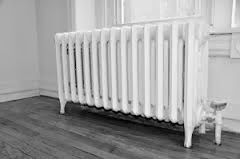
A short walk back across Station Street, up the back stairs onto the porch to shake off the snow. Leaving my boots behind along with my snowsuit, into the kitchen I ran to sit on the radiator until I thawed!


As I got older I could go sledding alone -- that is, alone with my dog Skippy. He was my companion. Up the hill dragging my sled, Skippy leaping back and forth dipping his nose into the snow. At the top, I would coax him close enough to get him into my lap, then off we would go. He would wiggle away from me, preferring to run alongside and bark!

Off the sled I went, as Skippy races back.'
We outgrew that hill. A little farther away was the old lower road that led down from Seager's Hill. At one time it was kept in good condition. It was once used by David Seager's farm to bring goods to the railroad to ship to Boston. In the mid 40s it was showing deterioration. A good snowfall hid all the ruts and washouts. It was a long, great ride down that old road. But it was a longer pull up!  Sometimes half way was enough.

The upper road to Seager's farm (now Deer Hill Lane) was even better to slide on because of its good condition . . . but one would have to watch for Mr. or Mrs. Seager returning home. Only once did I encounter Mrs. Seager coming up the hill as I was going down. Up and over the banking I went as she drove slowly by with a smile and wave -- phew!

Another great hill was behind Torrey Little’s Auction Barn, (formerly Hoods Milk, 575 Summer Street). This was a wide path that ran up to Canoe Tree Lane. It was steep and fast.

A long tug uphill.
Christmas and New Year's would bring a big gathering of kids and adults from that area. There were a few times a kid we called “Ham Bone” brought the six-foot-long double runner his grandfather made. It took three or four of us to pull and push it to the top. On we would get, then shove off, and down we would go.


We would be at the speed of sound as we approached the bump at the opening in the stone wall. Into the air we would go!  Every time I can remember, we would come crashing down on the sled’s side. We always made it without a scratch!

Bill Frugoli of Summer Street remembers, “The slide started at Donald Hagar's house and came down the path just north of the barn between a small opening in the stone wall. It stopped out in front of the barn. Before you got to this point, you would go off the embankment by the rear of the barn -- it was about a three-foot jump. It knocked the hell out of your lungs and guts.” (circa 1948)

Bill said of Florence Tilden, (Harry Tilden's wife) who also lived on Summer Street, ''She told us of stories when her kids were young, they would come down the hill on toboggans and continue to the left down Summer Street and come to a stop at about Alfred Hitchcock's house (663 Summer Street).”

“Back then, Summer Street was a dirt road. The snow was packed down as hard as ice.”

"Strange---what brings these past things so vividly back to us---sometimes."
- Harriet Beecher Stowe, Uncle Tom's Cabin

by Ray Freden  
Seaview/ Marshfield 70 years

Sunday, December 16, 2012

The Days Before Christmas


As far back as I remember, we always had a pine tree for Christmas. About a week or so before Christmas, on a Saturday, my Dad would get out his tree cutting tools. They consisted of a small hatchet and a hand saw. Dad liked the saw because it didn't make much noise!

Mom would get me bundled up in my winter clothes, hand knitted mittens and hat. Dad would let me carry the hatchet in spite of Mom's protest! The hatchet blade was wrapped up with an old rag and tied, keeping me safe.

Off we would go down the old railroad tracks to a cart path crossroad (now Pinehurst Road). We would take the cart path into a pine grove of small trees. These pine trees were spreading into the pasture land of David Seager's Farm.

Dad would select one a little taller than he could reach. He would send me in to trim the lowest branches with the hatchet. This was quite a task for a young kid.  Dad helped me those first few years. He would take his saw and, in short order, over the tree fell.

Now the task of dragging it home: Dad in front and me taking up the rear, trying to keep the tree from dragging along the ground, while still hanging onto my hatchet!

Finally we arrived home. I was pooped!

Oh no, we weren't through. Dad had me gather up the bushel baskets stored in the barn. Into the back seat of the old Chevy they went. We now headed off to Pine Street.

About half way down Pine Street, we pulled over, across from the brick yard factory. We scrambled over the embankment, jumped over the brook and through the thick moss.

The moss-covered ground under the hemlock trees was ideal for Princess Pine to thrive. We would pick a basketful -- how pretty those little tree-like plants were. A good crop of Trailing Ground Pine was also found growing through the Hemlock litter and moss.

With two full baskets, we headed back to the car. I would drag the lightest basket to the edge of the brook. Dad would carry it over the brook, up the bank, and into the Chevy. (I was back at the brook on my hands and knees having a cold drink, and boy was that water cold!)

Back home we unloaded the full baskets of greens. Dad got the round frames made of chicken wire down from the barn attic. They still had a few dried-up leftover greens from last year. I would clean them out and start weaving the Princess Pine into the frame.

I had watched Dad make these wreaths as long as I could remember. He would fix them up here and there where I messed up. During this time Dad was making a stand for the tree (no store-bought stand here!) Finally, late in the afternoon, we had three wreaths made and a tree ready for decorating.

Remember, this took place on a Saturday, so now what? Into the old Chevy and off to Sted's. I, holding a five cent returnable bottle. Dad would get a bottle of Ballentine Ale and a cigar. I would exchange the bottle for a candy bar. After arriving home, the tree got dragged into the house to be decorated the next day.

Supper came and went. Now it was time for a few games of checkers. I, with a candy bar and a glass of milk. Dad, with a glass of ale and a cigar. As I look back, I lost most of the checkers games, but I won a day with my Dad.


''The smells of Christmas are the smells of childhood'' - Richard Paul Evans

by Ray Freden. The village of Seaview, Marshfield Ma.

P.S. I still have one Christmas tree ball from my first Christmas. It's 78 years old!


Thursday, March 15, 2012

The Hurdy Gurdy Man and his Monkey


I don't remember the first visit of the Hurdy Gurdy Man and his monkey, however it was before school age. Maybe 1938 or 9.

During those early visits, my Mom would be with me on our Summer Street driveway. Mom would hand me a penny and I, in turn, would hold it out for the monkey. Those first years I remember of being timid of this dressed-up animal.

These summertime visits became an event to look forward to. Most of my days were spent out in the yard. Being outside, I was aware of the noises of goings-on in the neighborhood. This was during WW2, so the cars and trucks going by were few and far between. It was quiet.

The faint melody of an organ playing just atop the hill, up past the Seaview Garage, got my attention. I would drop everything, run to the edge of Summer Street and look up the hill to Banner's house, where I would see the Hurdy Gurdy man grinding his organ, with his monkey collecting coins from the kids.

His next stop would be the Seaview Garage. Pansy, the book keeper, and Eula, the owner’s daughter, had a weakness for that cute little monkey. I could see the monkey crawling all over them. How envious I was! How in the world could I get him to do that with me?

The stop at the garage gave me time to run into the house and shake pennies out of my tin bank. It didn't take me long to learn to use a knife to jimmy out the coins. I now was armed with five or six pennies, waiting for the Hurdy Gurdy man to stop at my house.

"Hey kid, where's da pennies?''
 
Every time I handed out a penny, the monkey would look at his master. Little did I know, he was looking for a command. After the fifth penny, the monkey got a command to hold my finger. Later and older, I learned that silver coins were the secret to the monkey’s bag of tricks!

I remember so vividly the monkey’s outfits. During the hot summer months, the monkey wore a red and black vest with gold trim and gold-looking buttons; and a pair of black shorts with red side stripes and gold trim. Three brass buttons were on the sides of the shorts. It also wore a red fez-shape hat with a chin strap, and a gold tassel on top that flopped around. The monkey had a leash and collar that had worn away its neck hair.

The Hurdy Gurdy Man wore an outfit as a worn as the monkey's was: a black shirt, sometimes white, and a black bow tie; a black vest with red and gold trim. Black trousers, sometimes knickers; black socks and shoes. His hat was a very worn fedora (maybe) with a gold and black feather, also very worn.

The Organ Grinder had black hair, sharo features and some gold teeth. He always wore a smile and my Mom said, “He had a twinkle in his eye,” whatever that meant.

The organ was a square box with a crank handle, a leather strap, and a grille in front; it was supported with one leg.

On my Dad’s way home from the Greenbush railroad station, he would pass the Hurdy Gurdy man hiking up the long Summer Street hill. The monkey would be hanging on top of the organ that was strapped to the Hurdy Gurdy’s back. I know the organ grinder man and his monkey were still making the Summer Street trip in 1951.

I got my driver’s license in May of '51 and sometimes would make the Greenbush railroad station trip to pick up my Dad. I too would pass the Hurdy Gurdy man somewhere on Summer Street, headed back to his car, which was parked on the old road at Stoddard's Corner. I wondered many times how an organ grinder could afford that new, big, black Cadillac sedan, collecting pennies.

His Caddy parked beside a barn on Summer St.'
 For over 10 years, before 1940 to after 1951, Summer Street, Seaview, Elm Street and Humarock were so fortunate to be entertained by those wonderful characters. I can find no record of who he was or where he was from.

by Ray Freden, Remembering the Village of Sea View.

Tuesday, January 31, 2012

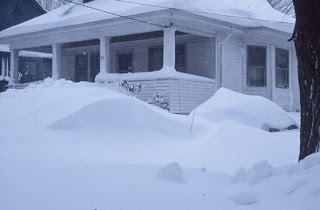
The Blizzard of ‘78, 34 years ago

I am jumping ahead of "the kid from Seaview" in the 40s & 50s, to a 44 year old man from Seaview. I was teaching in Fitchburg, Ma. So, on February 6th, 1978, I was up at 5:00 to leave Seaview about 6:00 for the 90-mile journey.

Monday morning off I went, with a slight falling of snow, arriving at school at 7:55, just in time for class. I kept an eye on the much faster and heavier snow falling. School was called off at noon. I called my wife to get the latest news; she said, “It’s getting bad.” I had a room in Ashburnham, but decided to head back home,

East on Route 2 was plowed, however, slow. It took two hours to get to Route 128 – usually about 30 minutes. Approaching 128, I had to make a decision to continue on Route 2 or 128. Route 128 looked clear, so down I went. As I approached the Mass Pike, I entertained the idea of heading toward Boston.

Unbeknownst to me, at 6pm, Route 128 was at a complete jam in Canton. I did not have a radio in my truck to monitor the storm or traffic. It was stop and go for about a mile, then stop and no more go! I could see the railroad bridge in Westwood.

14 died from carbon dioxide poisoning.

After about an hour, people were walking past me. I stopped one and asked where everyone was going. That person was going to seek refuge in the St. Bartholomew Church, not far away. He told me that Route 128 was jammed solid. Not being a church going person, I opted to stay in my truck.


It was quite cold and the wind wouldn't stop howling! A few more cold souls passed by about 10PM. I was quite aware that exhaust fumes entering the cab could do me in! I cleared the snow away from the exhaust a few times. I had my suitcase with me for my week of extra clothes, and the two sheets I would have used on my bed in Ashburnham. I usually had some leftovers and sandwich making stuff, however I left that back in the shop refrigerator. I cracked open the wing windows and the back slider for a fresh flow of air. I turned the heat to full hot and high fan, wrapped up in the sheets, and dozed off. When the heat got so hot I woke, turned the truck off, and dozed until I was cold. That went on for nearly six hours.

The sound of sirens awoke me at about 6:30 am. Two State Police cruisers were broadcasting that a bus was coming to transport any of us left. This was happening on the cleared northbound lane, now being used for both north and southbound traffic.


About 20 of us abandoned our vehicles, climbed over the guardrails, and boarded the bus. More were picked up as we traveled along. We ended up at the National Guard Armory in Dedham. They let us use their phone to call our loved ones. My wife and two kids were fine as well as Reggie, our dog. They had plenty of wood for heat and cooking.

After I contacted my wife, the guardsmen fed us onion soup for breakfast! There were four of us at the table trying to decide what to do. There was a small restaurant close by that we ended up having a lunch in.

Two of the group were from Quincy, one from Norwood, and me, from Marshfield. The two from Quincy left us. My new-found friend said he would walk home to Norwood and asked if I wanted to come along. I did.

Oh my god, what was I in for? Down Route 1, unplowed! We were walking on a snowmobile trail with just the roofs of cars showing! As we passed Lechmere's, the snow had drifted so high it covered the entire entrance!

We continued until we came to a Chinese restaurant, and turned right up a hill that was barely plowed. It was dusk. When we arrived at my friend’s house, the entrance was completely covered in snow!


Our shovel was a board. It took about 30 minutes to get through the door with quite frozen hands. My friend’s wife made us dinner, we did some chatting, then off to the sofa for a some well-needed sleep. The next morning: a nice breakfast, a thank you, and a farewell.

I hiked south on Route 1. Some plowing had been done to Route 27 -- that was my way home. I got a ride on the running board of a wrecker into Stoughton, another ride in the back of a pickup through Brockton, and finally another ride on the step of a grader into Rockland. I headed east on Route 123 and got a ride to 3A & 123.

As I got to Neal Gate Street in Greenbush, a friend picked me up and dropped me off at my front door! Wednesday, Feb. 8th about 2pm -- two and half days. Not too bad!

My wife had the deck and back steps cleared. Up I went, opened the back door and hollered, “I'm home!” My wife said that she had a feeling I'd be home that afternoon. Hugs and kisses for the wife, the kids, and the dog, in that order.

Now my wife says, “Let’s take a walk down to Fourth Cliff to see the damage!” Oh well, why not? My legs were still in motion from hiking from Norwood.

A week later I obtained a permit to recover my truck. I found it in the northbound lane. The National Guard had cut openings in the guardrails and dragged all of the vehicles into the northbound lane.

The next week was spent freeing the vehicles.

All was well, except all my clothing in the suitcase was gone! I suppose a Guardsman was grateful for the dry clothes!

by Ray Freden Seaview/Marshfield

"Snowflakes are one of nature's most fragile things, but just look what they can do when they stick together." - Vesta M. Kelly

Wednesday, June 15, 2011

Pizza Pies

Research tells me the first American pizzas were known as “tomato pies.” Tomato pies are built the opposite of the “Pizza Pie,” first the cheese, then the toppings, then the sauce.


It wasn't until the 1950s that Americans started to notice pizza. Celebrities of Italian origin such as Jerry Colona, Frank Sinatra, Jimmy Durante, and baseball star Joe DiMaggio all devoured pizza. It is also said that the line from the song by famous singer Dean Martin, “When the moon hits your eye like a big pizza pie, that’s amore,” set America singing and eating pizzas! [1953].


I cannot remember having a pizza during World War II or before. My parents would try many places for a Saturday night pizza. The closest pizzas were the Bridgwaye Inn and the Humarock Lodge, but neither were satisfactory.

Next tries were a place in Fieldston, then Brant Rock, with no luck.

A Greek restaurant in Scituate, nope. Not that these pizzas were bad -- they just were not pleased with some part of the pizza.

Maybe 1947 or 8, my uncle Herb, Dad’s twin, got a nighttime job at the Rockland Bar and Grille in Rockland. Herb alerted my parents to the great pizzas. One Saturday night we drove to Rockland to try one. I think in those days there were only cheese pizzas. It was great!

Whenever my folks wanted a pizza, off to Rockland we went. I can remember after I got my driving license (May 1951), I would be sent to Rockland for a takeout pizza.


In 1949 or 50, a new building was constructed at 20 Sea Street, in Humarock (really Seaview). A family from Quincy, that operated a pizzeria in Quincy, opened Miramare Pizza as a summer business.


There was Sal, the cook; his sister Celeste was the waitress and cook; and the matriarch mother, Naomi, ran the cash register. They would let me stash my bike behind the building when I went to Humarock. This was during the rebuilding of the new Sea Street bridge, during the summer of ' 51 (completed in 1952).

After stashing my bike, I would take my chances crossing the bridge over the catwalks provided for the work crew. They were planks maybe 10” wide and stretched randomly across the spans of the old part -- and some of the new parts of the construction too. We kids from both sides would, at night, go to Humarock or cross back to get to the pizzerias, or to “Stead's.”


Pizzerias, yes. At one time, another pizzeria opened in the Davis bakery across from Miramare's. They may have been Greek pizzas.

Miramare's pizza place had plenty of parking, but the joint across the street did not -- so people would park in Miramare's lot and walk across the street to the Greek place.

Well Naomi would have no part of that. She would yell out the front door to get the hell out of her lot! If they did not respond, Naomi would stomp right up the stairs into the joint and make them move their car or she would call the cops. She would make quite a scene!

Some of my friends liked the Greek pizzas. One time I joined them but didn't purchase any food, only a soda. Well Naomi saw me coming out of the joint and did she give me hell.

I explained I didn't buy anything but a soda. It didn't matter. If you’re going in there, don't come in here!”

Later that night, I went into Miamare's for a pizza with a friend. I got the cold shoulder from the old matriarch.

One cheese pizza: 75 cents. Two drinks: 20 cents. A 15 cent tip. Total: $1.10, split 55 cents each. That was the summer of 1952.


The pizza joint across the street didn't last long -- maybe two summers.

Miramare's stayed into the 60s. It closed soon after Sal died.

Now Papa Gino’s gets our $10-$12! We don't have a Papa's here in “Down East” Maine, so my wife and I put together a pretty good 'roni and 'shroom pizza every Sunday night.

I don't remember 5 cents.
But I do remember a 10 cent  slice.


Ray Freden
Sea View resident 60 years, Marshfield, 70

Monday, June 6, 2011

The Pine Street Dump

As long as I can remember, Sunday mornings were the dump run. Dad would get the trash barrel up onto the front bumper of his old Chevy, tie it down, then off to the Pine Street dump.

This was exciting to me. First, unload the trash. Then find as many of gallon jugs and wine bottles as I could. We would stand at the edge of the trash and Dad would throw a jug up into the air and I would throw a wine bottle at it. With luck, I would make contact and crash the jug to bits! Oh yes, there were many misses. I often wonder how dangerous this could have been.

Next, there was looking for treasures to take home. Sometimes I would find a usable toy car or truck, a table and chair for use in my tent, which was set up in our back yard. Dad's great finds were old lamps that he would fix up to use in our house. The dump attendant was usually not there on Sundays, so “pickin” was uninterrupted.

One day, we arrived and unloaded. There was a desk upended, the drawers were out, and alongside, all empty. Dad uprighted the desk; a small drawer was still in it, the knob was gone and the drawer was stuck. I got a screwdriver from Dad's toolbox and pried it open. Oh-my-word, it was full of watches and chains, rings, tie clips, cuff links and other gold stuff. Out came a watch, and as I was winding it to see if it worked, in came the dump attendant. He jumped out of his truck and shooed us out of there!

I slipped the Waltham watch into my pocket and we left. When we arrived home, Dad inspected the watch. It was running. What a find! Dad took it to a jeweler in Boston near his work. He had it cleaned and timed. The jeweler said it was a nice watch but very common and not worth a whole lot -- that was in the 40s. Dad wore that watch to work for many years. I have no idea where it ever went. I often wondered what that drawer full of gold was worth!

Sometime after 1946, and under new ownership, the Seaview Garage's attic was being cleaned out to create an apartment for the new owners. That attic was used for storage of auto parts from the 1920s. First the Maxwell auto car, then Ford model Ts, then the A’s. In 1932, the Ford B, the first Ford V-8s. Over 30 years of auto parts stored in that attic, all new and some parts still with paper wrapping.

One day after school, I arrived at the garage. Jimmy, a garage employee, had a dump truck under the trap door from the attic, and he was pushing parts into the truck. He was cleaning out the attic and taking the parts to the Pine Street Dump. Load after load! I so wanted all those parts dumped into my yard. My Dad would have no part of that.

I think how I could have become an antique auto parts supplier. I did salvage four Maxwell hubcaps, (new old stock). I somehow have lost them. Today, they would bring any price you asked!
All of those collectable auto parts, buried in the Pine Street dump. Maybe someone should excavate the dump to salvage those parts.

My dump “pickin” continued through the 60s. After getting married in 1962, much of the furniture in our first home came from the dump. I repaired and refinished it, and it served us well. Most of it was returned later.

Monday, April 25, 2011

Strangers

If you have read my last blog, you know what an expert I was at knowing who was coming up and down Summer Street in their cars. There was one sound that I dreaded: the bell.

Sometime in the summer before World War II, I could faintly hear a bell up Summer Street past the Seaview Garage. I would run out to the edge of the street and see, just coming over the hill, a horse and wagon. Its bell would ding-ding-ding as the horse stepped along.


The Gypsies were coming! I would hightail it out to the Station Street side of our house and hide in the corner outside the porch. As I heard the bell pass by on Summer Street, I would peek past the corner of the house and watch them pass the Bonneys’ and then out of site. I would be a wreck!

My Dad thought they came to town for the Marshfield Fair, to sell wares, read palms, cards and other Gypsy tricks. My Mom told me the gypsies stole children!

My Dad said that they came every year at fair time, and they camped down at the Round's farm. That was the dirt road beside 91 Summer Street. I was told to stay in the yard, and to make sure Mom knew where I was. I did and did!

After supper, at dusk, I could hear chanting and singing faintly off toward the farm. When the wind was just right, I could smell a fire burning. As the next few years went by, the gypsies came and went. One year -- I must have been 12 or 13 -- I was now old enough to be a Boy Scout and had a compass. It was with me most of my time not in school, as taking it to school was forbidden, as there were some bullies that would take it.


One afternoon I was sitting on the stone wall beside our house, trying to learn all of the directions and degrees for a merit badge, and then I heard the bell coming. I jumped up to look up Summer Street and sure enough, the Gypsies were coming. I was much older now, not a child anymore. I knew I could hide behind the big maple tree beside the house. I was about as big around as a pencil and the big tree would hide me. I would be able to see them up close as they passed.

As they approached, I had to slide around so as not to be seen, It worked -- they went past, I could see the lady on the right side of the seat, the bright trim on the canvas cover, some tools attached to the wagon. I could even smell the horse.
As I came out on the south side of the tree and watched, the lady's arm dropped down and she waved her finger. OH S---! She saw me! What to do?


I told my parents, and my Dad said not to worry. “They have been coming for years and no one has had any problems with them.”

I don't remember when they stopped coming, nor did I ever find their campsite. My friend, the late Phil Randall, told me they camped not too far from the spring and not too far from his shop.
I recently spoke with a former Seaview resident, 90 year old Helen. She too remembers the Gypsies. Where they came from, or who they were, remains a mystery to me.

Monday, April 18, 2011

Cars and Drivers

Before World War II, there was not much traffic on Summer Street. I learned at a young age to recognize the sound of a neighbors’ car before it came into sight.

There were two neighbors with 1930s Model A Fords that had a very distinctive sound. Harry Rogers from the “Hills” had a Model A Ford that he used to deliver spring water (Canoe Tree Springs) to neighbors, as well to “Steads” and Clarks’ store. Ralph Hatch's '36 Ford had a rattle somewhere underneath -- it drove me crazy! Why doesn't he fix it? Mrs. Stiles’ '37 Plymouth would emit a huge cloud of smoke when she accelerated it! In the early 50s, she would stop at the Seaview Garage once a week for a dollar’s worth of gas, and every other day for a quart of oil! She left with a cloud of smoke behind.

Many drivers coming down Summer Street would shift to neutral at Seaview Ave. and coast past the Seaview Garage, then clear down to Keene's Pond. My Dad would coast down Summer Street from the Lampson Estate to about the Hitchcocks’ house, (663 Summer Street). I have always wondered how much gas was saved.

From Memorial Day and into the summer, it would be a challenge to identify who was coming down the street, because of the arrival of the summer folks. Many bigger and newer models -- Packards, Caddies, Buicks and an Auburn. These, made my game difficult.

The most noisy were Gino Rugani's Sterling trucks. They were huge, 1930s green and red painted monsters with a chain drive. There were 3 or 4 of them. One was used to haul his bulldozer or shovel on a low bed trailer. All of them sounded different and the drivers drove them differently.

These were first kept across from the Rugani home on Dog Lane at Pleasant Street. I would hear them climb the hill on Summer Street; from Pleasant Street to Seaview Ave, their chains would grind, then as the truck coasted passed my house, the chains would make a slapping sound with no load on them.

I could tell when Louie, Gino's son, was driving -- his shifting was different than Buddy's, their truck driver and mechanic.

I could hear these trucks on Church Street on their way home in the late afternoon, slowing at Church, Elm and Summer Street -- there was no stop sign in those days -- then start up Summer Street at Randall's under the strain of the long grade uphill.

Occasionally, Louie would take me on a short trip in the dump truck. It was so noisy inside you would have to holler to be heard! Louie was the foreman of the operation, which was the biggest in Marshfield. Louie drove a Ford 100 green pickup, and wore a baseball cap with a Heinz pickle pin attached to the front. Louie loved that pin.

One afternoon about five, I was pushing my bike up the hill on Summer Street from Pleasant Street. About halfway up, Louie came over the hill towards me, in his '47 Ford pickup. I waved to him. Just as he passed, he backfired that Ford at me! It scared the bejesus out of me! I thought I was shot! I shook all the way home!

That was the first time that happened, but not the last. I expected it to happen again, anytime he passed me. I learned that trick well. Later in life I used that trick many times. My favorite spot was going past Sonny Oxner's garage on Ferry Street, letting out a blast when Sonny's doors were open. Sonny cursed me many times.

Monday, March 21, 2011

Ho Jos


 Our shopping trips always seemed to take us past a Howard Johnson's. In the 40s, I don't remember calling Howard Johnson's "HoJo's.”

Pembroke, MA. Route 14 and the then-Route 3.
On our trips to Brockton, we would leave Seaview, finding our way to Water Street in Pembroke, turn left on what was then Route 3, then right on Route 14. A Howard Johnson's was on that corner, next to the Gilbert West Box Mill. There were long windows in front and on the south side. I remember sitting inside on the south side and how bright and warm it was.

Whitman, MA. Bedford Street and Warren Ave. The 2x4 Ho Jo's.
 As we wound our way through Whitman, there was a Howard Johnson's snack bar, an eat-outside only. It was a 2x4, as my Dad called it. Many years later I found out what a 2x4 building was!

Over the railroad tracks in the Montello section of Brockton, another HJ’s. I remember having our lunch there. We always had the same thing . . . that I will reveal later.

Late in the afternoon, after shopping, we headed home on Route 123. When we did not take Neal Gate Street to 3A, I knew that Dad had a plan. He would go to the lights in Greenbush, turn right, and then take another right into the nicest Howard Johnson’s I can remember seeing: a beautiful building, manicured grounds, and a paved parking lot.

There was always room to park. The front of the building was full of windows that ran from the ceiling to the floor. Above the orange roof, on a cupola, was my favorite weathervane, ''Simple Simon and The Pieman,'' with a dog. How I wished we could have one on our garage.

Simple Simon met a pieman going to the fair;
Said Simple Simon to the pieman "Let me taste your ware"
Said the pieman to Simple Simon "Show me first your penny"
Said Simple Simon to the pieman "Sir, I have not any!"

Simple Simon went a-fishing for to catch a whale;
All the water he had got was in his mother's pail.
Simple Simon went to look if plums grew on a thistle;
He pricked his fingers very much which made poor Simon whistle.
He went for water in a sieve but soon it all fell through;
And now poor Simple Simon bids you all "Adieu"


I seem to remember a ''Simple Simon'' weathervane whirly gig. The pieman's tray would move, Simon's finger or arm moved, and the dog's tail wagged up and down. I'm not sure if this was on the Greenbush HJs. I also remember a Lamplighter weathervane on a HJs somewhere.

Most of the time I would sit on one of the red stools at the soda fountain and order a frankfurt, now known as a hot dog -- plus an orangeade. My Mom and Dad would sit in a booth; they always ordered fried clams, french fries, and tea or coffee.

The frankfurts were sliced across on two sides, and fried on two sides. The bun was also fried on both sides (now called grilled). This was put in a cardboard container with “Simple Simon and The Pieman,” with his dog printed on both sides. Two straws came in a cardboard container for the soda.

I would always beg a few french fries, then look over the Howard Johnson toy trucks on the shelf that were for sale and way beyond my parents’ budget. I would save the paper placemats from the table. During the war, the mats had a fighter plane, a tank and a war ship printed on them. Also there was a mat with the 28 flavors of ice cream with a bumble bee flying with a spoon. I often wonder what ever happened to all that stuff?

When I was lucky, I could have a ten cent ice cream. Most of the time it would be a chocolate one, sometimes coffee. All of that would cost my Dad about $1.70.

We would visit other Howard Johnson’s in Scituate, Hingham, Wollaston Beach & Wollaston. There are only three Howard Johnson restaurants left.

Scituate MA. Hatherly Road, on the way to Minot.

Good bye to Howard Johnson’s, HJs & HoJo's.