Showing posts with label Seaview history. Show all posts

Wednesday, February 6, 2013

The Longest Winter Coast

In the winter, sled coasting seemed as important as bike riding in the summer.

My sledding story of 1/20/13, “The Winter Days of Sledding,” brought me back to the most memorable coasting I ever had. At age 10 or so, I knew the Flexible Flyer sled was the best of the bestest! I remember outgrowing it and asking Santa for a new bigger Flexible Flyer sled.


A Christmas or two came and went, although there were gifts, there was no Flexible Flyer! Yes, there were wet eyes. My Dad explained it was war time and certain things were not available. Oh well, I'll have to make do with I have.

On a Christmas school vacation week, sledding was most every day. Yes, some kids had new sleds. The New Year’s weekend was coming up, and the coasting was great. On New Year’s morning, as Dad was cooking breakfast, he looked at me and asked, “Why didn't you put your sled away last night?”

I was puzzled. I responded, “I did.”

“No you didn't,” Dad said. “Go look.”

As I neared the back door, I could see something sticking up in the snow – it kinda looked like my sled. But then, WOW! I saw a big, shiny sled! 

I ran out of the porch, no jacket or boots, grabbed the sled out of the snow bank, and dragged it into the porch!

It wasn't a Flexible Flyer, but a big, long, sleek, brand new Champion sled! Oh, I could hardly wait to get to the hill to show off my Champion.

“But wait,” Dad said, “It's not broken in!” 

“Huh?” I said. “Whata-I-hafta-do, Dad?”

He showed me how to polish the runners and wax them. I rubbed and rubbed them with a broken piece of sharpening stone, and waxed them with paraffin wax.

Oh boy, it sure ran fast on my little back yard hill! Now, off to the big hill on Summer Street.

Skippy and the Champion waiting to go sledding.'
 Yes, it was fast! And it was faster than any sled on the hill that day!

A winter or so later, we had a very snowy winter. A foot or more snow crusted over, so it could be walked on without breaking through. Word got out that Doroni's hill on Pleasant Street was great sledding, and it sure was.

One weekend, the area kids gathered to race down that tomato field on top of a frozen crust. Franky C. had a long rope attached to his tractor and would pull us back up after a run. Not only did we have a sled tow, but on break, we could run across the street for an ice cream at the Peacock Tearoom. (See my blog of 4/21/08.)

 Late on Sunday afternoon, I prepared for my last run. I waxed the runners, ran, and flopped on my Champion. I sped down that hill, a right turn onto Pleasant Street, down Pleasant Street, a sharp corner to the left and a long straight run to Summer Street.

And a long straight run to Summer Street
 Back then, the roads were not sanded. It seemed I'd never stop coasting! When I approached Summer Street, I slid to a stop into Gino Rugani's parking lot. I sat up, looking back at the hill in disbelief. It seemed like I just coasted a mile! That never happened again in my days of coasting.

by Ray Freden

Seaview, Marshfield 70 years

"Write what should not be forgotten." - Isabel Allende.

Sunday, January 20, 2013

The Winter Days of Sledding

I think every kid that grows up with winter snow looks forward to that storm that brings enough snow to cover their favorite hill.

I was one of those kids. There was a hill just across the street, and just enough hill for a little kid. My Dad would haul my sled up the hill, get on the sled with me in front, and away we would go!

We would whiz to the bottom in no time, time and time again, until my little legs could take no more!

“That’s enough for me too,” Dad would say.

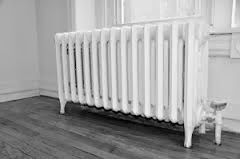
A short walk back across Station Street, up the back stairs onto the porch to shake off the snow. Leaving my boots behind along with my snowsuit, into the kitchen I ran to sit on the radiator until I thawed!


As I got older I could go sledding alone -- that is, alone with my dog Skippy. He was my companion. Up the hill dragging my sled, Skippy leaping back and forth dipping his nose into the snow. At the top, I would coax him close enough to get him into my lap, then off we would go. He would wiggle away from me, preferring to run alongside and bark!

Off the sled I went, as Skippy races back.'
We outgrew that hill. A little farther away was the old lower road that led down from Seager's Hill. At one time it was kept in good condition. It was once used by David Seager's farm to bring goods to the railroad to ship to Boston. In the mid 40s it was showing deterioration. A good snowfall hid all the ruts and washouts. It was a long, great ride down that old road. But it was a longer pull up!  Sometimes half way was enough.

The upper road to Seager's farm (now Deer Hill Lane) was even better to slide on because of its good condition . . . but one would have to watch for Mr. or Mrs. Seager returning home. Only once did I encounter Mrs. Seager coming up the hill as I was going down. Up and over the banking I went as she drove slowly by with a smile and wave -- phew!

Another great hill was behind Torrey Little’s Auction Barn, (formerly Hoods Milk, 575 Summer Street). This was a wide path that ran up to Canoe Tree Lane. It was steep and fast.

A long tug uphill.
Christmas and New Year's would bring a big gathering of kids and adults from that area. There were a few times a kid we called “Ham Bone” brought the six-foot-long double runner his grandfather made. It took three or four of us to pull and push it to the top. On we would get, then shove off, and down we would go.


We would be at the speed of sound as we approached the bump at the opening in the stone wall. Into the air we would go!  Every time I can remember, we would come crashing down on the sled’s side. We always made it without a scratch!

Bill Frugoli of Summer Street remembers, “The slide started at Donald Hagar's house and came down the path just north of the barn between a small opening in the stone wall. It stopped out in front of the barn. Before you got to this point, you would go off the embankment by the rear of the barn -- it was about a three-foot jump. It knocked the hell out of your lungs and guts.” (circa 1948)

Bill said of Florence Tilden, (Harry Tilden's wife) who also lived on Summer Street, ''She told us of stories when her kids were young, they would come down the hill on toboggans and continue to the left down Summer Street and come to a stop at about Alfred Hitchcock's house (663 Summer Street).”

“Back then, Summer Street was a dirt road. The snow was packed down as hard as ice.”

"Strange---what brings these past things so vividly back to us---sometimes."
- Harriet Beecher Stowe, Uncle Tom's Cabin

by Ray Freden  
Seaview/ Marshfield 70 years

Sunday, December 16, 2012

The Days Before Christmas


As far back as I remember, we always had a pine tree for Christmas. About a week or so before Christmas, on a Saturday, my Dad would get out his tree cutting tools. They consisted of a small hatchet and a hand saw. Dad liked the saw because it didn't make much noise!

Mom would get me bundled up in my winter clothes, hand knitted mittens and hat. Dad would let me carry the hatchet in spite of Mom's protest! The hatchet blade was wrapped up with an old rag and tied, keeping me safe.

Off we would go down the old railroad tracks to a cart path crossroad (now Pinehurst Road). We would take the cart path into a pine grove of small trees. These pine trees were spreading into the pasture land of David Seager's Farm.

Dad would select one a little taller than he could reach. He would send me in to trim the lowest branches with the hatchet. This was quite a task for a young kid.  Dad helped me those first few years. He would take his saw and, in short order, over the tree fell.

Now the task of dragging it home: Dad in front and me taking up the rear, trying to keep the tree from dragging along the ground, while still hanging onto my hatchet!

Finally we arrived home. I was pooped!

Oh no, we weren't through. Dad had me gather up the bushel baskets stored in the barn. Into the back seat of the old Chevy they went. We now headed off to Pine Street.

About half way down Pine Street, we pulled over, across from the brick yard factory. We scrambled over the embankment, jumped over the brook and through the thick moss.

The moss-covered ground under the hemlock trees was ideal for Princess Pine to thrive. We would pick a basketful -- how pretty those little tree-like plants were. A good crop of Trailing Ground Pine was also found growing through the Hemlock litter and moss.

With two full baskets, we headed back to the car. I would drag the lightest basket to the edge of the brook. Dad would carry it over the brook, up the bank, and into the Chevy. (I was back at the brook on my hands and knees having a cold drink, and boy was that water cold!)

Back home we unloaded the full baskets of greens. Dad got the round frames made of chicken wire down from the barn attic. They still had a few dried-up leftover greens from last year. I would clean them out and start weaving the Princess Pine into the frame.

I had watched Dad make these wreaths as long as I could remember. He would fix them up here and there where I messed up. During this time Dad was making a stand for the tree (no store-bought stand here!) Finally, late in the afternoon, we had three wreaths made and a tree ready for decorating.

Remember, this took place on a Saturday, so now what? Into the old Chevy and off to Sted's. I, holding a five cent returnable bottle. Dad would get a bottle of Ballentine Ale and a cigar. I would exchange the bottle for a candy bar. After arriving home, the tree got dragged into the house to be decorated the next day.

Supper came and went. Now it was time for a few games of checkers. I, with a candy bar and a glass of milk. Dad, with a glass of ale and a cigar. As I look back, I lost most of the checkers games, but I won a day with my Dad.


''The smells of Christmas are the smells of childhood'' - Richard Paul Evans

by Ray Freden. The village of Seaview, Marshfield Ma.

P.S. I still have one Christmas tree ball from my first Christmas. It's 78 years old!


Thursday, March 15, 2012

The Hurdy Gurdy Man and his Monkey


I don't remember the first visit of the Hurdy Gurdy Man and his monkey, however it was before school age. Maybe 1938 or 9.

During those early visits, my Mom would be with me on our Summer Street driveway. Mom would hand me a penny and I, in turn, would hold it out for the monkey. Those first years I remember of being timid of this dressed-up animal.

These summertime visits became an event to look forward to. Most of my days were spent out in the yard. Being outside, I was aware of the noises of goings-on in the neighborhood. This was during WW2, so the cars and trucks going by were few and far between. It was quiet.

The faint melody of an organ playing just atop the hill, up past the Seaview Garage, got my attention. I would drop everything, run to the edge of Summer Street and look up the hill to Banner's house, where I would see the Hurdy Gurdy man grinding his organ, with his monkey collecting coins from the kids.

His next stop would be the Seaview Garage. Pansy, the book keeper, and Eula, the owner’s daughter, had a weakness for that cute little monkey. I could see the monkey crawling all over them. How envious I was! How in the world could I get him to do that with me?

The stop at the garage gave me time to run into the house and shake pennies out of my tin bank. It didn't take me long to learn to use a knife to jimmy out the coins. I now was armed with five or six pennies, waiting for the Hurdy Gurdy man to stop at my house.

"Hey kid, where's da pennies?''
 
Every time I handed out a penny, the monkey would look at his master. Little did I know, he was looking for a command. After the fifth penny, the monkey got a command to hold my finger. Later and older, I learned that silver coins were the secret to the monkey’s bag of tricks!

I remember so vividly the monkey’s outfits. During the hot summer months, the monkey wore a red and black vest with gold trim and gold-looking buttons; and a pair of black shorts with red side stripes and gold trim. Three brass buttons were on the sides of the shorts. It also wore a red fez-shape hat with a chin strap, and a gold tassel on top that flopped around. The monkey had a leash and collar that had worn away its neck hair.

The Hurdy Gurdy Man wore an outfit as a worn as the monkey's was: a black shirt, sometimes white, and a black bow tie; a black vest with red and gold trim. Black trousers, sometimes knickers; black socks and shoes. His hat was a very worn fedora (maybe) with a gold and black feather, also very worn.

The Organ Grinder had black hair, sharo features and some gold teeth. He always wore a smile and my Mom said, “He had a twinkle in his eye,” whatever that meant.

The organ was a square box with a crank handle, a leather strap, and a grille in front; it was supported with one leg.

On my Dad’s way home from the Greenbush railroad station, he would pass the Hurdy Gurdy man hiking up the long Summer Street hill. The monkey would be hanging on top of the organ that was strapped to the Hurdy Gurdy’s back. I know the organ grinder man and his monkey were still making the Summer Street trip in 1951.

I got my driver’s license in May of '51 and sometimes would make the Greenbush railroad station trip to pick up my Dad. I too would pass the Hurdy Gurdy man somewhere on Summer Street, headed back to his car, which was parked on the old road at Stoddard's Corner. I wondered many times how an organ grinder could afford that new, big, black Cadillac sedan, collecting pennies.

His Caddy parked beside a barn on Summer St.'
 For over 10 years, before 1940 to after 1951, Summer Street, Seaview, Elm Street and Humarock were so fortunate to be entertained by those wonderful characters. I can find no record of who he was or where he was from.

by Ray Freden, Remembering the Village of Sea View.

Monday, April 25, 2011

Strangers

If you have read my last blog, you know what an expert I was at knowing who was coming up and down Summer Street in their cars. There was one sound that I dreaded: the bell.

Sometime in the summer before World War II, I could faintly hear a bell up Summer Street past the Seaview Garage. I would run out to the edge of the street and see, just coming over the hill, a horse and wagon. Its bell would ding-ding-ding as the horse stepped along.


The Gypsies were coming! I would hightail it out to the Station Street side of our house and hide in the corner outside the porch. As I heard the bell pass by on Summer Street, I would peek past the corner of the house and watch them pass the Bonneys’ and then out of site. I would be a wreck!

My Dad thought they came to town for the Marshfield Fair, to sell wares, read palms, cards and other Gypsy tricks. My Mom told me the gypsies stole children!

My Dad said that they came every year at fair time, and they camped down at the Round's farm. That was the dirt road beside 91 Summer Street. I was told to stay in the yard, and to make sure Mom knew where I was. I did and did!

After supper, at dusk, I could hear chanting and singing faintly off toward the farm. When the wind was just right, I could smell a fire burning. As the next few years went by, the gypsies came and went. One year -- I must have been 12 or 13 -- I was now old enough to be a Boy Scout and had a compass. It was with me most of my time not in school, as taking it to school was forbidden, as there were some bullies that would take it.


One afternoon I was sitting on the stone wall beside our house, trying to learn all of the directions and degrees for a merit badge, and then I heard the bell coming. I jumped up to look up Summer Street and sure enough, the Gypsies were coming. I was much older now, not a child anymore. I knew I could hide behind the big maple tree beside the house. I was about as big around as a pencil and the big tree would hide me. I would be able to see them up close as they passed.

As they approached, I had to slide around so as not to be seen, It worked -- they went past, I could see the lady on the right side of the seat, the bright trim on the canvas cover, some tools attached to the wagon. I could even smell the horse.
As I came out on the south side of the tree and watched, the lady's arm dropped down and she waved her finger. OH S---! She saw me! What to do?


I told my parents, and my Dad said not to worry. “They have been coming for years and no one has had any problems with them.”

I don't remember when they stopped coming, nor did I ever find their campsite. My friend, the late Phil Randall, told me they camped not too far from the spring and not too far from his shop.
I recently spoke with a former Seaview resident, 90 year old Helen. She too remembers the Gypsies. Where they came from, or who they were, remains a mystery to me.

Monday, April 18, 2011

Cars and Drivers

Before World War II, there was not much traffic on Summer Street. I learned at a young age to recognize the sound of a neighbors’ car before it came into sight.

There were two neighbors with 1930s Model A Fords that had a very distinctive sound. Harry Rogers from the “Hills” had a Model A Ford that he used to deliver spring water (Canoe Tree Springs) to neighbors, as well to “Steads” and Clarks’ store. Ralph Hatch's '36 Ford had a rattle somewhere underneath -- it drove me crazy! Why doesn't he fix it? Mrs. Stiles’ '37 Plymouth would emit a huge cloud of smoke when she accelerated it! In the early 50s, she would stop at the Seaview Garage once a week for a dollar’s worth of gas, and every other day for a quart of oil! She left with a cloud of smoke behind.

Many drivers coming down Summer Street would shift to neutral at Seaview Ave. and coast past the Seaview Garage, then clear down to Keene's Pond. My Dad would coast down Summer Street from the Lampson Estate to about the Hitchcocks’ house, (663 Summer Street). I have always wondered how much gas was saved.

From Memorial Day and into the summer, it would be a challenge to identify who was coming down the street, because of the arrival of the summer folks. Many bigger and newer models -- Packards, Caddies, Buicks and an Auburn. These, made my game difficult.

The most noisy were Gino Rugani's Sterling trucks. They were huge, 1930s green and red painted monsters with a chain drive. There were 3 or 4 of them. One was used to haul his bulldozer or shovel on a low bed trailer. All of them sounded different and the drivers drove them differently.

These were first kept across from the Rugani home on Dog Lane at Pleasant Street. I would hear them climb the hill on Summer Street; from Pleasant Street to Seaview Ave, their chains would grind, then as the truck coasted passed my house, the chains would make a slapping sound with no load on them.

I could tell when Louie, Gino's son, was driving -- his shifting was different than Buddy's, their truck driver and mechanic.

I could hear these trucks on Church Street on their way home in the late afternoon, slowing at Church, Elm and Summer Street -- there was no stop sign in those days -- then start up Summer Street at Randall's under the strain of the long grade uphill.

Occasionally, Louie would take me on a short trip in the dump truck. It was so noisy inside you would have to holler to be heard! Louie was the foreman of the operation, which was the biggest in Marshfield. Louie drove a Ford 100 green pickup, and wore a baseball cap with a Heinz pickle pin attached to the front. Louie loved that pin.

One afternoon about five, I was pushing my bike up the hill on Summer Street from Pleasant Street. About halfway up, Louie came over the hill towards me, in his '47 Ford pickup. I waved to him. Just as he passed, he backfired that Ford at me! It scared the bejesus out of me! I thought I was shot! I shook all the way home!

That was the first time that happened, but not the last. I expected it to happen again, anytime he passed me. I learned that trick well. Later in life I used that trick many times. My favorite spot was going past Sonny Oxner's garage on Ferry Street, letting out a blast when Sonny's doors were open. Sonny cursed me many times.

Monday, March 14, 2011

Apple Cider Time

In the fall, when apples were a-plenty, my Dad and I would gather all kinds from around the neighborhood. We used bushel baskets to gather up the apples. I would fill ‘em, and Dad would carry them to the old Chevy and stack them where the back seat had been removed.

Back home, stems and leaves were removed, rotten ones discarded, then washed down. Now, out came the apple press and crusher. We washed it down with water and bleach. It was set up in the garage and fastened down. A blue and white enamel pot was fitted with a topping of cheesecloth and slid under the press. The baskets were set atop each other beside the press.

Dad would crank the handle, I would stand on a wooden box and toss in the apples. Ground-up apples spewed out into a slatted barrel-like cage that contained the mash. When the cage was full, it would be topped with a wooden head. A screw was turned to press the mash. After a few turns, out of the tray would come a clear golden juice.

Then, back off the screw, clean out the cage and do it again and again until the apples were gone. I would have a drinking glass close by, to hold under the stream until full. Oh, how good that was.

Next step was to bottle this golden juice. Dad had a dipper that he dipped in the pot, then he poured the juice into a cheesecloth-covered funnel that was stuck into glass gallon jugs that we had scavenged from the dump. These jugs had been washed, scalded, and bleached days before -- that was my job. Mom would bring scalded corks out to us, steaming, and in they would go. That would take all of a Saturday.

Sunday morning, Dad would haul a six-foot table from the cellar and drag it to the side of Summer Street. The table was made from an old Singer sewing machine base and a shed door. Then out came a green ice cream chair with a splintery wood seat. This was my stand!

We filled the table with gallons and half gallons of fresh apple juice. A sign went up, “Fresh Apple Juice.” A gallon was 50 cents, plus a five cent jug deposit. Half gallon was 35 cents plus deposit.

One day I sold ten gallons. Wow, $5! I got 10% -- 50 cents. That would buy 10 candy bars or 10 Cokes or even a movie trip!

There was a customer that refused to pay the deposit and didn't return the jugs they had promised to. They never got another jug of juice either.

How sweet it was -- for about 3 or 4 days. It got tangy in about week or so. It was a good thing for corks. We would often find them popped out onto the porch floor as the juice fermented.

Dad would fill a small wood cask with apple juice and leave it in the cellar for about a year, we then had apple cider vinegar. I am now using a vinegar I made in 1975.

Monday, March 7, 2011

Roadside Stands

There were many roadside stands throughout Marshfield, and Seaview had its share. Most were vegetable or strawberry stands.


Before World War II, there was a stand on Summer Street across from the north end of Station Street. It was owned by Ollie & Anna Nourse. In the spring, many kinds of flowers were for sale, followed by early cherries and peaches. Then vegetables of all kinds. All grown on their property. You also could get a dozen eggs.


If that stand existed today, you would be taking your life in your hands stopping there! There was no off-street parking on their side, however you could park in a small space on the north end of the Seaview Garage and walk across Summer Street.

Further up Summer Street, about as far as Seaview extended, was Bob & Agnes Dow's stand. This was mostly a vegetable stand. Agnes did make some baked goods.


The most unforgettable stand was Agnes & Bill Bonney's, at the south end of Station Street at Summer Street. It was a 2x4 structure with lift-up front and sides. From the earliest flower to the latest, bunches would adorn the shelves as well as around the stand. Most were 15 cents; glads were 25 cents. The Bonneys had the most beautiful arrangements.

Glads were one of Mrs. Bonney's favorites.
 However flowers were not the big draw. It was Mrs. Bonney's baking. She filled the shelves with pies, cakes, cookies, and other sorts of pastries. Cakes were her best seller, specially decorated for any occasion. Mrs. Bonney would put a little extra decoration on a cake for her favorite customers -- the ones known to leave a tip.


On a Friday or Saturday afternoon during the summer, there was hardly a spot to park. Locals were arriving home after work, and summer people for the weekend. They would want her wonderful goods, rather than bake or cook. Mrs. Bonney's cooking was probably better than theirs anyway. On a Saturday, the pastries were gone by 1 p.m. Late Saturday afternoon, a line would form at the side porch door awaiting the baked beans, frankfurts and brown bread, along with any pastry left. Mrs. Bonney would have a new batch of goods for Sunday morning.

Notice the cuts in the frankfurt, the old fashion way.
 Summer Street was once the main route to Humarock from the Boston area, however those that came in from Route 3 would also find Bonney's wonderful goods.

We would never visit with Mrs. Bonney during her busy summer months, but an off-season visit was a treat. Brownies and a glass of milk were always on my priority list. Most families in the neighborhood were as poor as church mice, but were always generous with a cup of tea or coffee, and a home cooked treat.

Monday, February 28, 2011

Prohibition & Rum Running in Humarock


River look-outs, making sure the coast is clear.
If you have read my past story of the SC 41 Submarine Chaser that ended up on the Hanover Flat (and was used as a summer retreat), as well as the one on Leon Hatches Boat Yard, you now could be ready for “rum running” in Humarock.

For nearly 14 years, 1919 to 1933, our country was dry! It really wasn't, but selling alcohol was illegal. It didn't take long for the “swamp Yankees” to turn to “rum running.”

Illegal contraband liquor was a profitable enterprise for the water people. Boat motors were quickly converted over to more powerful and faster ones, and the insides of vessels were gutted for more space. A schoolmate, Alfred A., told me that his stepfather’s lobster boat was a “rum runner.” It had a big motor in it, and was quite narrow for a lobster boat.

Safe unloading areas were located. Bays, harbors, rivers, creeks, and other landing spots were found. Humarock was one of these safe places -- or at least more safe than other harbors. Federal funding was weak and the revenuers had to spread themselves thin.

This was an ideal drop off spot, just off the South River.
The North River mouth was the water highway out to the mother ships that were waiting three miles out to unload their contraband into smaller boats and dories. A very reliable source told me that most of the dories came from Hatch's Boat Yard and gunning stand. Others came from the North River. Most of the dories were powered by two rowers.

On a good night, a row out to the “Mother Ship” and back, took most of the darkened hours, depending on the weather. On occasion, unfavorable weather would delay the boatmen’s return. Daylight would give them away, so they would row up into a remote creek, cover their dory with marsh grass, and hunker down for the day with nothing to eat or drink! Or nothing to eat! Up to 20 cases could be safely stacked in the dories, however greed and poor judgment sent many boats floundering and losing their contraband. Some of this contraband would find its way to shore, where scavengers would find liquid gold!


Lookouts were needed to warn the boatmen of any danger that may come about. Lookout posts were stationed from the Sea Street Bridge to Fourth Cliff.

The lookout on the bridge was a well known local that had a non-drinking reputation, and liked to fish. His gear was a tin bucket, bait, a sharp knife, a hand line, a flashlight and cigarettes. Time on was 9 or 10 pm; off was daylight, rain or not. If the boats were out, you were on. Over would go the line, baited or not. Sometimes this lookout was joined by a friend -- his line would go over with a bottle of hooch tied on the end. This was to be retrieved periodically.

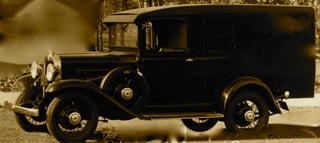
The hooch was unloaded at various locations. The cases were picked up by Chevy 6-cylinder panel trucks. Chevys were quieter than the Ford Model A’s. Canvas snap-on signs were attached to each side with a local milk company logo.

I was told, by the same reliable source, that only once, during this guard’s time on the bridge, did he have to call off a landing.

One night, just before midnight, a big black Packard with four men inside, strangers, stopped on the bridge and asked where so-and-so's cottage was. The fisherman gave them directions, and off they went. The fisherman/guard flashed a signal to the lookout on the point down river, and the signal was passed on to the cliff.

That night’s truck was turned around and left. No one else ever reported seeing the car or the men. No one saw them leave; no one reported using so-and-so’s cottage. However, this was a subject not discussed, and questions were unthinkable.

My late friend Phil, a Seaview native, told me the following. It seems that Charlie, Phil's father, took a walk to Pine Island. While coming back, just off the walkway, he saw a newly tracked path in the marsh grass. Off he went to investigate. He found something that was covered over with marsh grass. A case of 11 bottles of hooch!

Even though Charlie was a teetotaler, he was not going to leave this find. He covered it back up and waited until dark. Charlie made his way back through the cedar grove to the edge of the marsh, found the case of hooch, then made it home without being seen, he hoped! He stashed the case in the cellar, where his wife would not find it, as she was death against alcohol.

Within a few days, word reached Charlie, that Wally, a heavy drinker, was on a killing rage. It seems that someone stole his property from The Island. He was telling everyone in Seaview that if he found out who stole his property, he was going to kill them!

You see, the property was never Wally's. He probably found it stashed in one of the creeks by a boatman. Charlie never uttered a word. Some of Charlie's friends enjoyed a holiday gift!

 Chevrolet panel truck, much like the trucks used to deliver
illegal liquor to the speakeasies.


Ray Freden, Seaview resident, 60 years.

Wednesday, December 22, 2010

Learning to Drive on Central Ave. in Humarock

It must have been 1940. I was coming up to 6 years old. On Saturdays, late afternoon, Dad would drive his old Chevy to Steads store to get a bottle of Ballantine Ale and a cigar. I would beg him to drive to Fourth Cliff. We would drive over the hump in the old wooden bridge, pass Dick Smith’s garage, and make a left on Central Ave. Stopping near the Humarock Lodge, I would climb into his lap so I could steer and shift.

Dad taught me how to shift the 3-on-the-floor. Dad would operate the clutch and gas; I would steer & shift.

“Okay, into first,” he would say. Away we went.

“Okay, into second.” We went faster!

“Okay, into third'.” We were flying! Maybe 30 miles an hour past Hatches boat yard.

We turned at the base of Fourth Cliff and returned to the Lodge. I would take my place in the passenger side, then urge my Dad to go fast over the hump in the bridge -- which he did. All the wheels flew into the air! Or at least that’s what I thought. No, we didn't tell Mom 'til years later.

During the war years, there were fewer trips to the Cliff because of travel restrictions. Dad worked for the Boston Record American Newspaper and had a news reporter pass, so we were let through the barricade, and no, he wasn't a reporter. Dad did not allow me to drive in Humarock during those times.

After the war, I could drive without sitting in Dad’s lap, so off to Humarock for a drive out to the Cliff, or south Humarock to Carl Moreheart's parking lot next to Rexhame Beach.

Some Memories of Going to Humarock

From a very early age, I remember my Mom pulling my wagon to Humarock from our home in Seaview, to visit with her sister Margie. My Dad attached a box onto the wagon and I fit inside. It was a long bumpy ride. The roads were not paved as smooth as they are today (later in my youth, I was always frustrated trying to roller skate on the rough Seaview streets).

As we came over the knoll on Sea Street, Humarock came into view with the old wooden bridge to cross. During one of these trips across the bridge, my wagon wheel slipped down in between the boards, and my Mom couldn't pull it out. She had me get out and we tugged at it -- to no avail. I was pretty scared and in tears. My Mom took hold of me and across the bridge we went, leaving my wagon behind. She knew where help would be.

Into the Humarock Garage we went, to ask her friend Dick Smith, the owner, for help. He said, “Sure, Ruthie.” He came out with a pry bar and off we went back to the wagon. One pry and out it came. My wagon was saved!

Mr. Smith told my Mom not to use the wagon, with its narrow wheels, on the sidewalk -- to use the roadway instead, because the boards went the other way and so the wheels would not get stuck.

Mr. Smith, Mom, & I in my wagon were now off the sidewalk and on our way to visit with my aunt Marge. I don't remember any of the visit, but I do remember the trip back across the bridge. We now were in the roadway, past the hump, and almost off, when a car came along and the driver hollered at us to get off the roadway and onto the sidewalk! My Mom hollered back at him and told him to go-somewhere! There was quite a bit of talk -- about that person -- at the supper table that night with Mom & Dad. Mom knew who the driver was that hollered at us, but she never told Dad.

Friday, June 4, 2010

Holly Hill

When I was young, Holly Hill was a mountain. It was a challenge from all sides. I think my first recollection on this mountain was peering out the windshield of my Dads old Chevy, stopped on top of Upland Road, looking at smoke billowing into the sky somewhere near Boston.

My Dad used Holly Hill as a testing ground for his old Chevy. He would do a tune up on it, then pile me into the old six cylinder, and off to the hill we’d go. Dad would make a left turn on Elm Street then a right on Upland Road. If the old Chevy made it to Dwight Road in third gear, it was a good tune up. If not, he would get his screwdriver out, make an adjustment on the points, and try again. This was an exciting adventure because we seemed to be flying around that hill! Also, we would usually end up at "Stead’s" for a bottle of Ballantine Ale (35 cents), a cigar (15 cents), and a candy bar for me (5 cents). Total, 55 cents. Life was good.

There were only four roads on Holly Hill -- Upland, Dwight, Emery and Holly, with just a handful of houses. There was only one house on Upland Road, at the peak facing north, with a spectacular view of the North River, all the cliffs, and way beyond. The next best viewing point was at the peak of Emery Road, facing north. There were only two houses on the right side, The Chamberlains in the first, and the Stantons at the very top -- a brick house.

At the south end of Emery there were two houses on the left side, both very large and very beautiful. Dwight Road had only one house (brick) at the corner of Holly Road. This part of Holly Road no longer exists, and Holly Road off Dwight did not exist --just a cart path that went to Ferry Street. Most of the homes were on Elm Street, starting from Holly Road to Ferry Street.

Now for a stranger, Holly Road can be confusing. It starts on Elm and dead ends. It used go though to Emery, across to Dwight, then stop. Now it runs south from Dwight, almost to Ferry Street. I spent many trips down this muddy cart path collecting holly with red berries.

by Ray Freden
Originally published in the Marshfield Mariner, March 24, 2010

Pine Island

As I remember Pine Island, looking west from Broad Creek, c. 1946. Sketch by Ray Freden.  

 Pine Island is a small island just off the shore of Seaview, between Warren Ave. and Seaview Ave.
It is about an acre with a horse shoe shape, the opening is on the south side and the high tide will flow into it making the center path impassable.

As I remember it, the south path was a dead end. The north path circled around the north end, turning east then south in front of four camps, all of which faced east toward Humarock. The largest camp was on the north end, its entrance facing south, with a screened-in porch on the east side. There were two more camps on the west leg; one was never finished. Getting to these camps was a chore for owners, campers and hunters.

Looking east from Warren Ave. c. 1955.
 A deeply-rutted dirt cart path (now Warren Ave.) ran from Summer Street along the south side of two cornfields, and through a stone wall, turning north. At that turn was a cold clear spring with a wood cover and a chipped porcelain scoop for taking a drink or filling jugs for the campers. The path turned east to the edge of the marsh. There was a turnout for two cars. A long narrow wood walkway ran from the cart path to the west leg. The walkway was only wide enough for one person, and it was underwater at the high tides. The campers would have to carry everything across that walk, which was usually in need of repair. When the summer folks came for vacation, it took hours to unload gear and get it to the camp.

My first recollection of Pine Island was just before Thanksgiving; I was almost 5. Dad would go to the island to collect bay berries. He would cut them and my job was to carefully put them in a big basket. The island was covered with berries. He would carry the basket back across that rickety walkway; I carried the cutters. The car was parked in the turnout of the cart path.

Then he was off behind the turnout, through the brush, to the red berry bushes, I behind him carrying another basket -- more clipping and very carefully stacking. Off we went with two big baskets on the back seat. A stop at the spring for a drink. Oh, was that water cold.

Dad would make bunches of berries and greens for Thanksgiving and Christmas decorations. A few years later, when I was allowed to go to the island alone, I collected berries and greens, and took over his job. I sold the bunches around the neighborhood and up to the end of Summer Street on my bike.

We once encountered hunters in the end camp. There was a sign over the door -- it read something about being a hunting camp. My dad had a chat with them.
In the summer, two families from Lowell, MA came for most of the summer, to stay in the north camp. There were 5 kids; two were my age.

I would ride my bike down the cart path, over the walkway, around the north path; I would pass the outhouse, stop and lean my bike against the water pump. We were almost always in bathing suits and tee shirts, so off to the swimming hole we would go.

On the east side of Pine Island was a wooden walkway out to a leg of Broad Creek. At the edge of the creek were a dock, a ladder to a lower landing, and a diving board. The walkways and dock were built mostly from driftwood lumber scavenged from the marsh. The camps also were built from mostly salvaged lumber.

At low tide, I would have mud fights with the kids staying on the island. The older kids would grind the mud into us! Every inch was covered in black, slimy mud. Sometimes we would wait until the tide came in enough to wash off. Other times we would lay near the water pump while another pumped. It took a lot of pumping to clean up, & the water became colder the longer it was pumped. The pumped water on the Island was salty and discolored, used only for washing.

At mid to high tide, we would dive or jump from the board or off the railing. Full high tide would cover the dock and walkway, but only ankle deep. It was a challenge to ride my bike out to the dock, and a bigger challenge to ride back through the water.

A dory was tied on the south side of the dock. The two men and two older boys would row out through Broad Creek to the clam flats at low tide, dig clams, then go fishing in the river. They would return as the tide came in, going with the tides. There were plenty of flounder, mackerel, cod and haddock in the mouth of the North and South Rivers.

The men would clean the fish on the dock. I was invited twice for a cookout. This would be the fish fry. I would help with the cooking fire in a stone circle. Plenty of kindling could be found above the high tide line and someone delivered firewood for the campers, by wheelbarrow!

There was a steel cook plate across half of the fireplace. The men filleted the flounder, the women rolled them in cornmeal, and three of us kids kept the fire going. On went the flounder, mackerel and hot dogs. Mmmm was that flounder good! I would have no part of mackerel! The haddock and cod were saved for fish chowder.

A cookout on Pine Island was suppertime for the camp people. The fire pit was either going or smoldering most of the time. (When it rained they would cook on the wood stove in the kitchen; it was unbearably hot.) I was invited the day before, so my Mom had time to make oatmeal cookies.

Off I went down Station Street, turned down the Pine Island cart path, over the rickety wooden walkway, up the path to the camp, and gave the cookies to the Mrs. The kids were in the water on red inner tubes I had salvaged from the Seaview Garage. I ran down the walkway to the dock, off the diving board to cannonball the two in the tubes. The two older kids had left for the city, and good riddance! Now there were two of us 14 1/2 yrs. plus two younger, so we took over the tubes. We stayed in the water until we were blue.

Back to the camp, stashed the tubes under the porch and put wood on the fire pit to warm up. It was nearing their suppertime -- they ate much earlier than I was used to, but this was a cookout to me.

Much of the perishables were kept in a wood lined hole filled with water, with a cover with a large stone on top. Out came sodas and hot dogs. The dogs were all linked together and stayed that way on the cook plate over the fire pit. I remember how hot dogs always had to be cut on two sides to cook properly. These folks didn't do this. They also put ketchup on their dogs -- yuck, mustard only! We filled ourselves with dogs and orange soda and oatmeal cookies.

Just before dusk, out came the midges -- they would cover you in a short time and we would have to pump water on our arm and legs to wash them off before we went inside. Inside, we, the kids, would play checkers on the porch, with a kerosene lamp on the table. The adults would play cards in the kitchen with one of those Coleman gas lanterns I so much wanted.

Summer came to an end. The folks from Lowell left. Fall came. The hunters arrived, hung their decoys on the side of their camp, and collected marsh grass to build a blind out near the dock. So many times I would hear their guns banging away early in the morning and again in the late afternoon. I thought to myself, ”Who would want to eat a wild duck?” It wasn't until years later I found out how good a black duck is!

The next summer, only one family came to the island, with younger kids, so my visits were short. I found hanging out in Humarock with my summer friends was a lot more fun, jumping off the old bridge as well as the new one, the 1952 one.

Now I only went to Pine Island to collect berries in the fall. The camps were no longer used and began to fall apart rapidly. One late evening, I was driving home and there was quite a to do down Warren Ave. -- police and fire engines with flashing lights down the end of the Pine Island cart path. I suspected the worst -- the camps. I was told the next day that vandals had torched some of the camps! The others left standing were later torched.

I never went back to the island to witness the loss. I never saw my island friends again. My recent visits have been through the eyes of Google Earth. I have now witnessed Pine Island, after people!

Pine Island looking east, without people. Photo by Tony Lambert.


by Ray Freden
Originally published in the Marshfield Mariner, January 13 through March 3, 2010

Truck Farmers in Marshfield

Burlap bags of corn being unloaded.
In the 1940s Seaview had its share of truck farmers. These farmers were growing crops from the beginning of Seaview's settlement, but I only remember the 1940s & 50s.

I was always told they were "truck farmers." Most took their goods to the Boston market. Some research has informed me that "truck" was used to mean garden vegetables intended for sale in the market (1785). Now I have found out I was misinformed! They were "market gardeners!” I'm just going to call them what I had always been told, truck farmers and because I like TRUCKS!

But now, before trucks, wagons? Wagon farmers? I'll take you a little out of Seaview to Pine Street, North Marshfield. I was working for Franklin Hatch making furniture (1956- 1962). Elmer and Burton Fish lived next to Frank's shop and worked for F. Decker Hatch, Franklin's dad. Decker was a farmer and sawmill operator. On rainy or too-cold-to-work days, Burt would wander over to the shop and would tell me stories of his adventures. Most cannot be told here.

Decker grew crops all over Marshfield. Burt was the designated driver of goods to Boston by horse and wagon thru the early 1900s. It took Burt 10 to 12 hours one way, depending on weather. He would leave at 4 a.m. and arrive from 3p.m. and on. All were dirt roads, in poor shape, in North Marshfield, North Pembroke, Hanover and Hingham. He told me that Weymouth and Quincy roads were very busy.

Burt would stay over in the Essex Hotel and enjoyed what city living offered. Burt was a bachelor. He would quip, "Damn good thing the horse knew his way back home." Decker finally bought a Model A Ford truck in the early 30s. Burt could then make a round trip to Boston in a 12-hour day.

Saturday afternoons were special because after Dad finished his work around the yard or tearing apart the old railroad station, he would be off to Stead’s for a quart of Ballantine Ale and a cigar. I could tag along with a return bottle to exchange for a candy bar, .30 for quart of ale, .05 deposit, .15 for a cigar and 1 candy bar plus .05 exchanged for last weeks bottle! Total expense: 50 cents. High rollers, huh?

My Dad's favorite treat on a weekend afternoon.

 A quart of ale, 30 cents plus 5 cent deposit.

My favorite candy bar, a 5 cent bottle return.

On the way down, Dad would turn left on Elm Street and the next house on the left was the stately home of Victor Belanger, a beautiful home with a huge barn, another smaller barn, and many outbuildings. As we traveled further, we came to Ferry Hill Road. Mr. Belanger's land continued and included another large barn now known as the YWCA. A small pond and a boathouse were nearby. All of this to Little’s Creek was known as "Belangerville." From his home to the red barn (YWCA), was cultivated. There was a field of corn and fields of winter squash, maybe more. I'm not sure who cared for the fields -- it wasn't Mr. Belanger. He was a dapper of a man that did his business in Boston, and a gentleman farmer.

There were three fields of corn on the east side of Summer Street at a cart path to Pine Island, now known as Warren Ave. Before the war, Manuel DaLuz cared for these for Mrs. George Taylor, who owned large garden plots on both sides of Summer Street. Manuel was drafted into the Army and was gone long enough for those fields to grow into weeds and brush. Farmland was becoming valuable after the war. In 1946 the first new home in Seaview was built in that cornfield at 146 Summer Street and Warren Ave. by a Mr. Sherman. Keep in mind, houses were not numbered in Seaview in the 40s.

Gathering corn.

We continue up Summer Street and turn left on Pleasant Street under the railroad bridge, passing Gino Rugani's Sterling trucks. Gino was the largest general contractor in Marshfield. At the top of the hill, the street turned sharp right, shortly on the left was the Salvetti farm. Fields of tomatoes ran from the street up the hill and past their farmhouse and barn. Peter Salvetti was a mason by trade and also farmed his land to sell to the market, a truck farmer. His son Sergio still farms a plot of land atop the hill. Peter's son, Aldo, is also farming a small plot atop the hill behind the homestead. Aldo is my longest friend, from maybe 1938 or 9.

Across from the Salvetti farm were more fields of tomatoes. Next came another field of tomatoes up the hill to the Cervellis. Mr. Frank Cervelli was the largest tomato grower around. There were large fields past Eames Way, full of tomato plants strung on strings to a wire supported by posts on each end, as well as spaced every so many feet to support the weight of those large toms. Mr. Cervelli had a large processing operation off Pleasant Street. Crates of toms would arrive to be culled, washed, polished and packed for the Boston market. His truck would be stacked to the top of the boards, tied and covered with a canvas, ready for an early trip to the Boston market. I could never get enough of those big juicy sweet toms.

The largest-scale truck farmer in Seaview during the 40s and 50s was James Gonsalves, "Jimmy," from Moraine Street. He rented the fields from a Miss Donovan of 101 Summer Street and possibly a Mrs. Lucy Taylor of 119 Summer Street. There were more than 10 acres surrounded by wonderful stone walls known so well here in New England.

These walls were to keep livestock in -- or out -- also to mark owners’ boundaries. Where could all those stones, rocks and boulders have come from? And how to get them there! Imagine a boulder of 200 pounds or more sunken and in the way of the plow. You had to dig around it so as to wrap a chain, then have your team of horses or oxen pull it out! Then what? Pry bar it onto a skid or scoop and haul it to the wall area, then pry it off and into position. The next time you look at a stone wall, think how you would feel at the end of that days work!

Jimmy would rotate his crops within three fields; the largest bordered the railroad tracks then toward Summer Street. The next two were just behind the Donovan farm and the Taylor farm. These usually contained winter squash and sometimes corn. At harvest time, the workers would place wooden bushel boxes in a line, then cut the butternut squash and place them in another line, to be picked up later and placed into the boxes. A flatbed truck would come along and two men would load the boxes aboard, tie them down and cover with a green canvas. When the blue hubbard squash were harvested, they were just stacked into the truck up to the top board without a cover, then off to market.

In the large field, the corn harvest was done by pickers walking down a row, filling a sack then dragging it to the edge of the field where the tops of the sack were sewn tight then loaded onto the truck until full. The large field was often used for cabbage and sometimes lettuce, but most often for cauliflower. This harvest was the most complex to me. Just after the heads formed, workers would tie the outer leaves of the cauliflower with an elastic band so the heads would blanch and form uniformly. I had always thought they did this to keep the worms out! They kept the worms away by filling a sack with DDT then walking down the rows giving the sack a slight shake over the plant!

When harvest time came, hundreds of wooden bushel boxes were stacked in the northeast corner, along with a few tables and stools or chairs with broken off backs. The cauliflower plants were cut from their rootstock, tossed into a horse-drawn wagon then brought over to the corner where the cutters, usually ladies, chopped off the tops. They would hold the plant by the stalk, then slice the leaves off as close to the head as possible, a very precision task! As they sat around, going about business, they would chat in their native Cape Verdean, and sometimes English, always laughing. When the trimmed heads piled up, they would stuff a box with waste leaves then place the heads up, until the box was full -- I think five or six heads -- then cover it with leaves. The boxes were stacked along the edge of the field, awaiting the truck. The smells were awesome (I don't think I ever used that word in the 40s.) Fresh cut cauliflower, new pine boxes and the smell of the pines just across the tracks.

The boxes were made from boxboards from the Hatch Mill on Union Street and fabricated by someone unknown to me. However, many came from the Gib West Box Mill in Pembroke. Part of the building is still there, as well as the Hatch Mill.

A 1918 Wilcox Motor Truck and team of oxen loaded with empty wooden boxes
ready to pickup cauliflower off Summer St. in Seaview, c. 1920.
Jimmy’s truck would arrive late in the afternoon, to be loaded by the crew. Off came the stake side and back, then the loading began. Two men on the truck stacking, with the ladies passing up the boxes until they were to the top rail. The boxes were then covered over with a canvas to keep out the sun and dirt.

There were always culls left to rot, so I would help myself. This applied to corn, squash, cabbage and lettuce. I just mentioned the smells -- have you ever smelled a pile of rotten cauliflower? That smell would linger over Seaview for weeks!

I can't remember when Jimmy stopped truck farming in Seaview -- maybe in the late 50s. However Manuel kept on with it.

Another truck Farmer was Manuel DaLuz. I first remember Manuel living in a barn on the corner of Summer Street and Warren Ave. Manuel cared for and farmed the land of Mrs. Lucy Taylor of 119 Summer Street. Mrs. Taylor owned land on both sides of Summer Street back to the railroad tracks and fields along Warren Ave. to Pine Island.

Before the war, as I remember, the fields along Warren Ave. were full of corn. Manuel was drafted into the Army and the fields went unattended. After the war, a lot was sold to a Mr. Sherman and a beautiful home was built at 146 Summer Street, the first new home in Seaview for a very long time. Manuel returned from the war and now lived in Mrs. Taylor's home. The barn was moved back on Warren Ave. and turned into a home.

Manuel's '46 Ford truck.
 Manuel bought and sold junk as well as farming the land west of Summer Street. He had a stand in front of the high privet hedge and sold veggies and strawberries. I still can see his old truck stacked full, headed up Summer Street to the Boston Market.

If Manuel ever thought he was having a bad strawberry crop, it wasn't because of the robins or weather, it was because of the two young teenage birds camping out near the strawberry patch. My summer friend would arrive after school was out and we would look forward to our camp outs, sometimes in my yard and other times in his. One afternoon we planed a camp out for that night. We got permission from our parents, got our gear together -- tent, ground cloth, sleeping bags, lantern, comics, flashlight, drinks and snacks; oh yea, a jar with a cover full of holes. We set the tent up in a grove of locus trees at his house. We now killed time in the early evening playing ball, swapping comics and catching fireflies for use as a night light in the tent. Yes, it worked! Our plan for later was to raid Manuel's strawberry patch not far away.

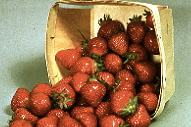
Around 10 o'clock we quietly and quickly ran across the meadow hunched down to the cart path (about where Pinehurst Drive is today), over the stone wall and on to the huge patch of big red juicy berries. We stayed on the outside row so as not to crawl over and crush any berries. Now the trick was to feel a berry and slightly push your thumbnail into it to test it's ripeness. Then pluck the big juicy ripe ones and munch 'em down, one after another, and another, and . . . Another trick was to bury the bitten-off stem with the other thumb -- we didn't want to leave any evidence of leftovers from the night time raiders!


About 15 minutes into our raid, we were scared to hell with the arrival of my dog, Lucky. Yep he came bouncing up behind us, tail a-wagging and a little happy whining. OH S---!!! You see, Lucky was an English setter, mostly white, and stood out like a neon sign! Not very good for us! Now with both of us on our hands & knees, Lucky thought we were playing with him and started barking! We had to get the hell out of there, so, we scrambled on our hands and knees and Lucky ran with us, barking and nipping our ankles. We got to the stone wall and cart path then full speed across the meadow and into the tent, dog and all. My friend was laughing like hell but I saw no humor in our past few minutes! I was shaking: who might have seen us? Who heard Lucky barking?

Needless to say, we didn't sleep that night, waiting for the Berry Police or even Manuel. WE never again raided Manuel's strawberry patch. My Dad didn't know that I asked Mom to keep Lucky in the porch that night, and he let him out when he went to bed. Lucky never touched a strawberry and was the only happy camper that night!

Hiding from the Berry Police.

by Ray Freden
Originally published in the Marshfield Mariner, June 10 through July 29, 2009